

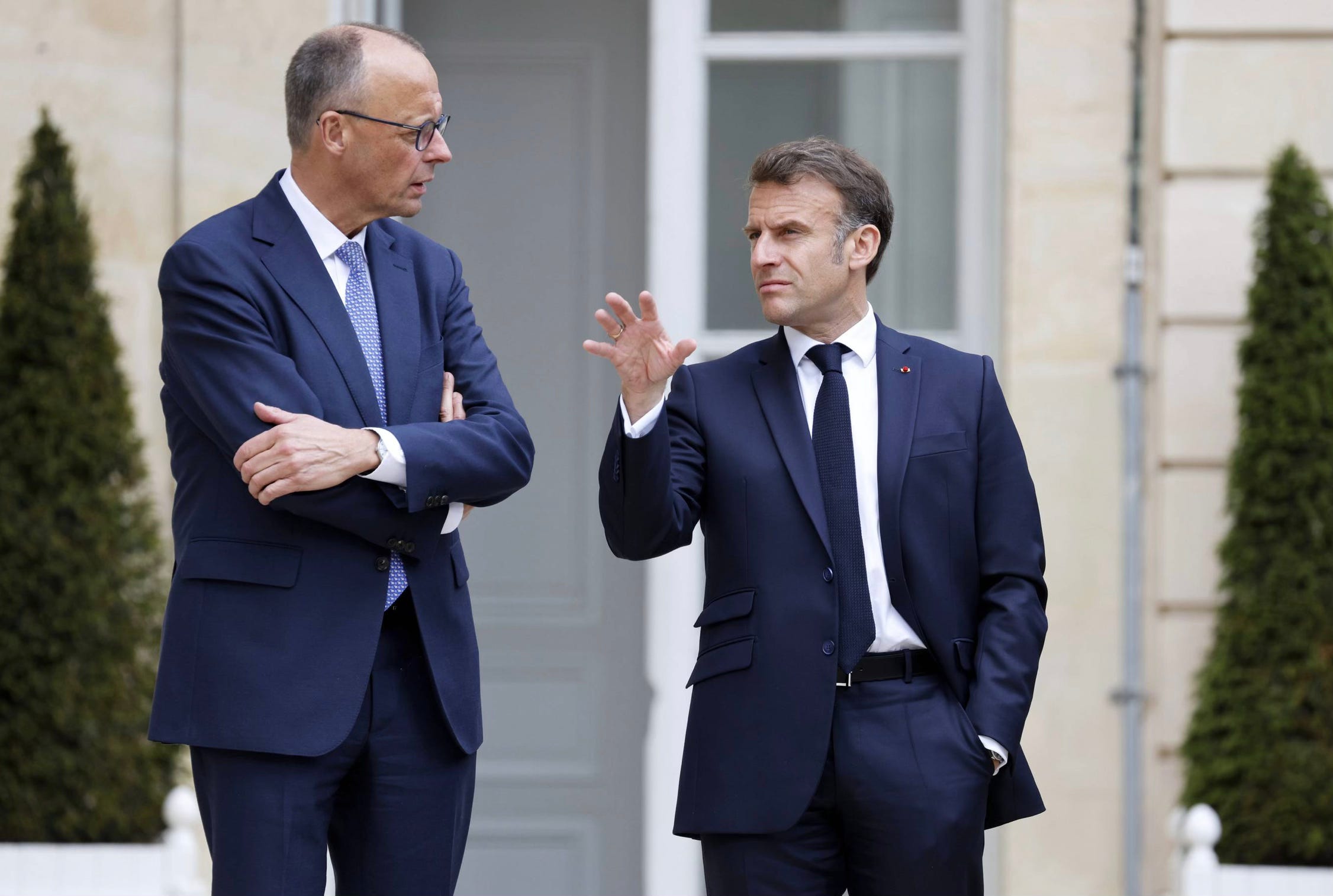
Germany and France are finalizing a joint paper which will call on the European Commission to fast-track development of an instrument that gives Brussels new powers to shut China out of the EU market, according to European officials. The officials expect the paper to receive a green light from France’s Emmanuel Macron and Germany’s Friedrich Merz in the coming days and then be sent to European Commission President Ursula von der Leyen. Promised by Merz and Macron when they met in July, the joint paper could be a game changer for European policy towards China - signaling that the bloc’s two biggest economies are united behind a common, more forceful approach after years of friction. Still, even if a new tool were finalized swiftly, it would not be ready until next year at the earliest, leaving the EU vulnerable to Chinese retaliation in the short-term. “It is basically finalized. We are well advanced” one official said of the Franco-German paper. “The instrument that we are calling for would allow us to cut China off from the European market within 24 hours.”
The official said the technicalities of how to construct the instrument, which could mirror US Section 301 tariff authorities, would be left to the Commission. One option would be to rework the Anti-Coercion Instrument (ACI) in order to lower the bar for its deployment. This could be achieved faster than developing a new tool from scratch. The ACI, which has not been used since its creation nearly three years ago, cannot be triggered unless a “positive” qualified majority of member states back its use – a very high bar. Germany and France want to lower the threshold for using such an instrument by requiring a “negative” qualified majority of member states to block it. That would reduce the risk of Beijing dividing EU member states through a mix of economic threats and promises of investment.